Join 1,000+ students already on Units
The fastest path
through high school
Gilbert tutors you with voice and a whiteboard to help you learn faster
and earn real high school credits that go towards your diploma.
How it works
From your first question to a credit on your transcript.
1Pick a course
Start any Units course, or snap a photo of your homework.
2Learn on the board
He talks and writes. You answer by writing, matching, ordering, or plotting.
3Earn the credit
Every skill you show counts toward a real high school credit.
Students moving faster than school allows

17, joined Units when school was getting in the way.
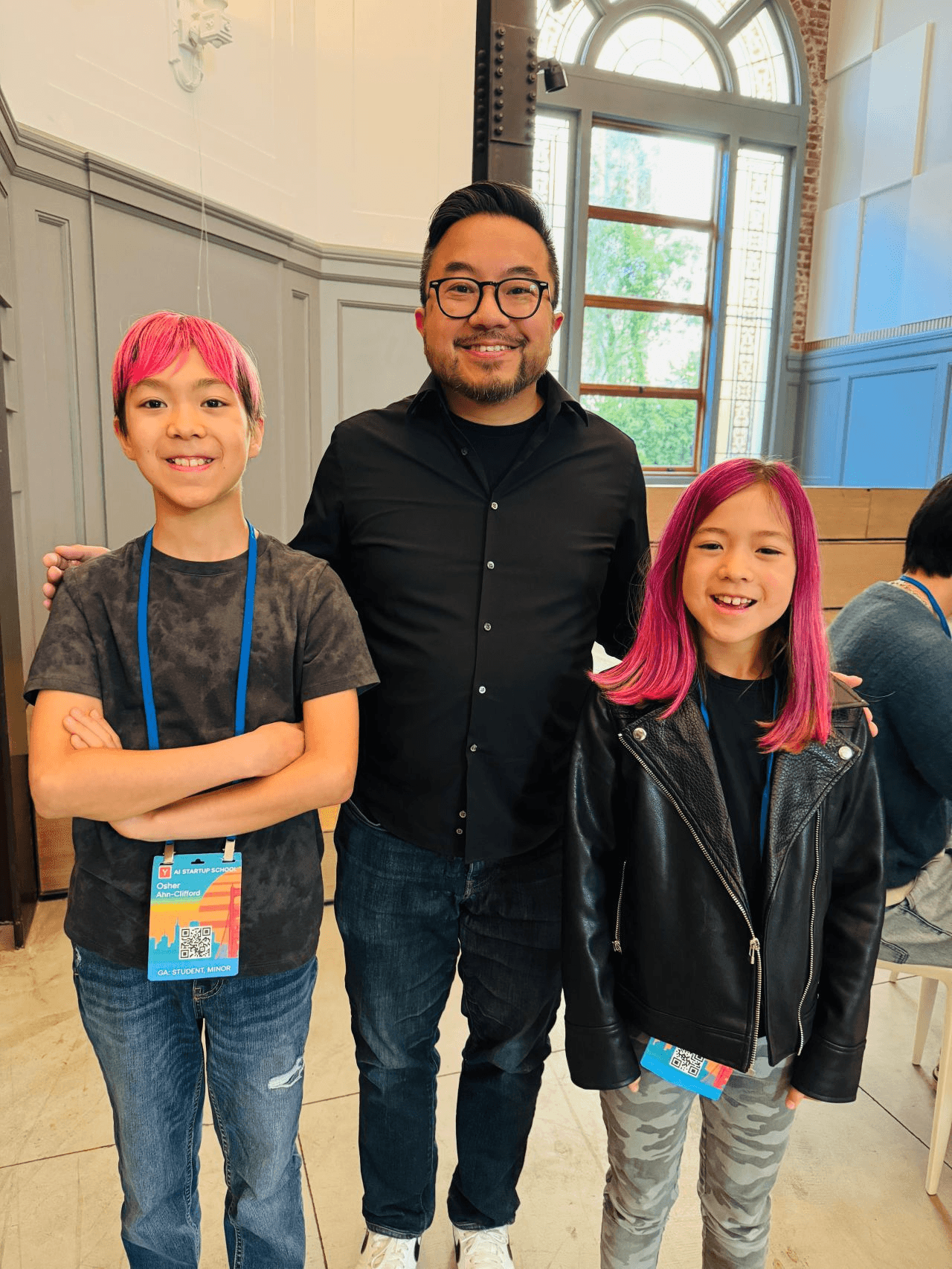
9 years old, taking Grade 12 English to go to Waterloo.

11th grader and gymnastics coach, finished Grade 12 English.
17, joined Units when school was getting in the way.
Now he's signed a $6.3M contract for his data startup, raised $165k, and is moving to SF.
Watch Remy's story9 years old, taking Grade 12 English to go to Waterloo.
Every other program her mother tried was long, boring, and not suited to her learning style.
11th grader and gymnastics coach, finished Grade 12 English.
He joined Units as soon as he heard he could free up his time to earn his aviation certification.
Talk to him
Like a tutor sitting next to you, not a chat box.
Gilbert talks to you
Turn your volume up. He says each idea out loud while he writes it on the board.
Learn to become irreplaceable by AI.
Create
Op-ed: Ban the bell schedule
Draft 3
Use any tool you want. The bar sits above what a prompt alone produces. Build things you're proud of.
Defend

Explain your choices out loud. Using AI isn't cheating—using it well is what matters.
Critique
AI's draft
You grade it
Grade AI's work yourself. If you can't tell mediocre from excellent, you haven't learned it yet.
Progress you can feel

XP and streaks instead of timed exams. Your latest work is your grade — growth, not accounting.
Tutoring works.
It never scaled.
98th
percentile, Bloom's tutored students
In 1984 Bloom put one tutor with one student. Those students finished two standard deviations above the classroom. Nobody can hire that tutor 30 times per room. Gilbert is that tutor, every lesson.
Bloom, B. S. (1984). The 2 Sigma Problem.
Bloom's 2 Sigma Problem
Everything a good tutor does
Each one built on a published result in learning research.
Asks before he explains
A lesson that feels effortless is a lesson you forget.
Bjork (1994). Kapur (2008).
Answers your words
Right: the interesting consequence. Wrong: the one part to rethink.
Hattie & Timperley (2007)
Quotes you
A skill is checked off with a quote of what you said. No quote, no check.
Roediger & Karpicke (2006)
Remembers you
One skill note and one preference per turn. The next lesson starts there.
Brings it back
Checked-off skills return weeks later, right before you would forget them.
Cepeda et al. (2006)
Rates skill, not streaks
One Elo rating for the hardest question you can handle. Easy answers barely move it.

FAQ
Frequently asked questions
Is Gilbert free?
Yes. Every lesson is free to learn. Getting a course on your transcript as a credit is a separate step, covered on How it works.
Will he just give me the answer?
No. He asks first, waits for you, then explains the one part you missed.
Can I talk to him?
Yes. He speaks each line out loud while he writes it. You can answer by typing or by talking.
Does a real teacher see my work?
Yes. Gilbert drafts rubric feedback on every project, and a human teacher reviews it before it counts.
Does he remember me between lessons?
Yes. He keeps a short note on each skill you show and how you like to learn, in your words.
Can I get credit for it?
Units courses count toward Ontario high school credits through accredited partner schools. Apply to start.
Does it work on a phone?
Yes. The board is built for phones as well as laptops.
Which subjects does he teach?
Every Units course. Or you can build your own.
Still have questions?
Ask about Gilbert. Keep going as long as you want.